Paycer – Bridging DeFi and Traditional Finance in One System
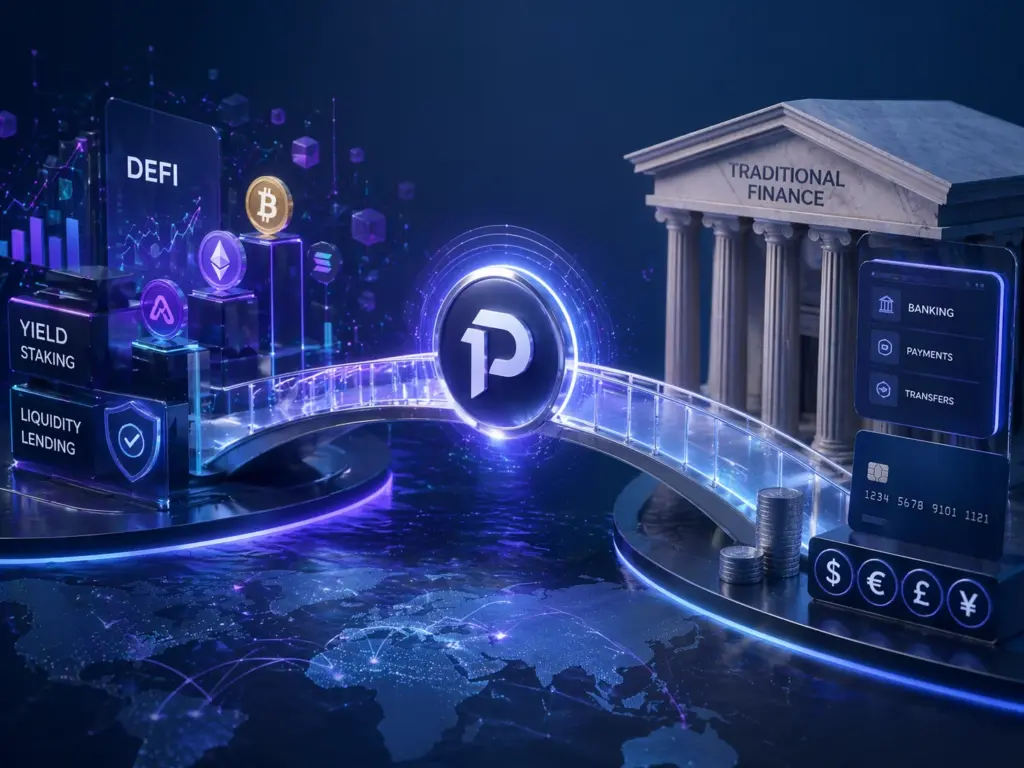
Paycer is a financial platform designed to unify decentralized finance and traditional banking into a single operational environment.
It allows users to manage digital and fiat assets, access yield-generating protocols, and execute global transactions without switching between fragmented tools.

Platform Architecture and Core Functionality
Paycer operates as a hybrid financial system that integrates blockchain-based protocols with conventional financial operations. The architecture is built around asset aggregation, allowing users to store, convert, and deploy funds across multiple financial layers.
At the operational level, the platform connects to decentralized protocols through smart contracts while maintaining compatibility with fiat-based systems. This dual-layer structure enables users to perform actions such as lending, staking, or transferring funds without leaving the platform interface.
The primary limitation of this model lies in dependency on underlying blockchain performance and liquidity conditions. However, Paycer mitigates this through protocol diversification and automated routing mechanisms that optimize execution paths.

Latest Posts
The newest updates appear here automatically. Up to six posts are shown, with the latest post always moving to the top of the grid.
-

BC Game Download: APK, Login, App Access and India Safety Guide
BC game download queries usually come from users who want quick mobile access to BC.Game, especially on Android, where APK…
-
Bitcoin Casino Online: How to Choose a Crypto Casino Safely
A bitcoin casino online lets users deposit, wager and withdraw with cryptocurrency instead of relying only on cards, bank transfers…
-

Gamification in Finance: Turning User Habits into Engagement Engines
Gamification in finance changes how users interact with money. A financial app is no longer only a place to check…
-

Investor Psychology in Fintech: How Emotions Shape Platform Choices
Investors often describe their choices as rational: returns, fees, volatility, yield, and performance charts. In practice, the final decision is…
-
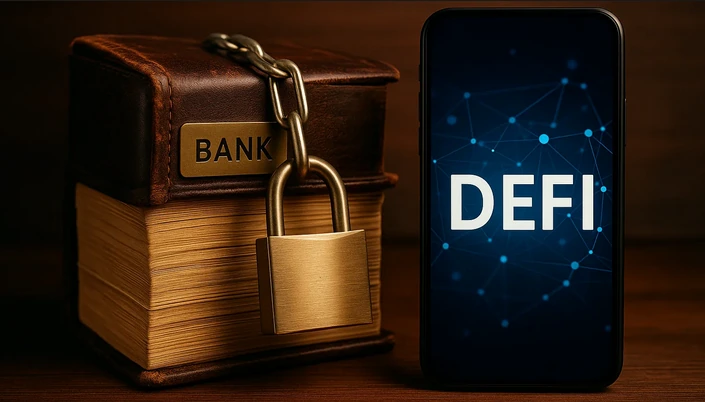
How DeFi Is Replacing Traditional Banking, One Protocol at a Time
DeFi vs traditional banking is not a simple argument about “new finance” replacing “old finance.” It is a structural comparison…
Asset Management Across Systems
Users can manage cryptocurrencies and fiat balances within a unified dashboard. Currency conversion occurs through integrated liquidity sources, reducing friction in cross-asset operations. This setup supports both short-term transactions and long-term allocation strategies.
User Experience and Accessibility Model
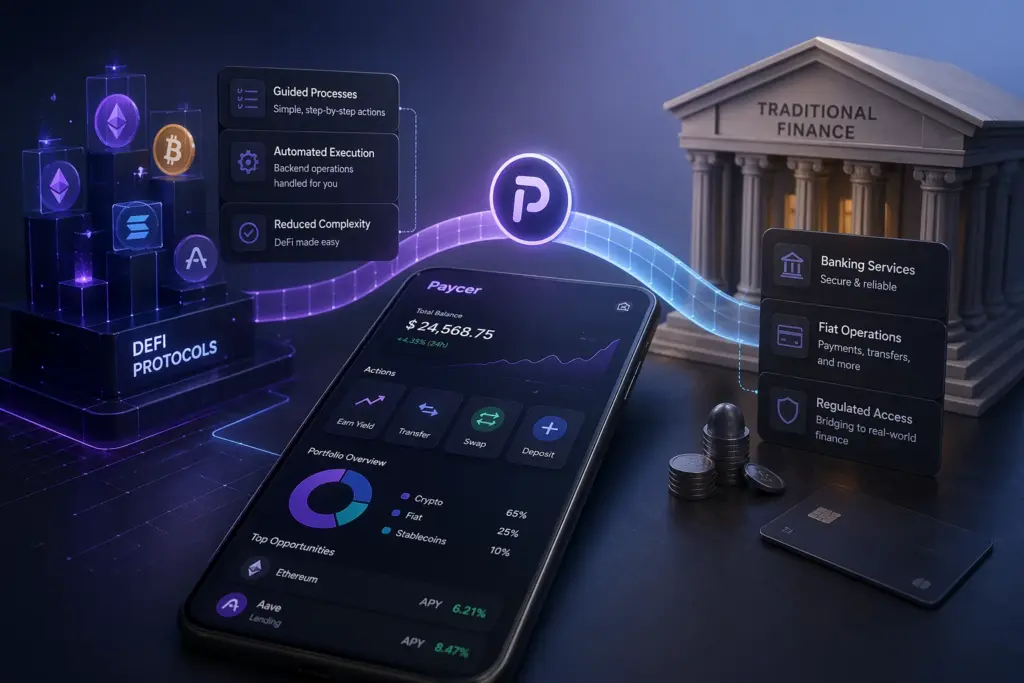
Instead of requiring multiple wallets, exchanges, and interfaces, Paycer consolidates these functions into one system. This creates a structured entry point for both experienced investors and users transitioning from traditional finance. Instead of requiring manual interaction with protocols, users select predefined actions such as “earn yield” or “allocate funds.”
Process Simplification Mechanism
Transactions are abstracted into clear steps. Wallet connections, gas management, and protocol selection are handled internally. This reduces error rates and shortens onboarding time for new users.
User Experience and Accessibility Model
A central attribute of Paycer is interface simplification. DeFi tools are traditionally fragmented and technically complex. Paycer restructures these interactions into guided processes that resemble standard banking workflows. The platform then executes backend operations automatically, reducing technical barriers. The main constraint is reduced manual control compared to direct protocol interaction. However, this trade-off improves accessibility for a broader audience.
Hybrid
Integrates blockchain-based protocols with conventional financial operations.
Dual-layer
Enables users to perform actions such as lending, staking, or transferring funds without leaving the platform interface.
Yield Generation Through DeFi Integration
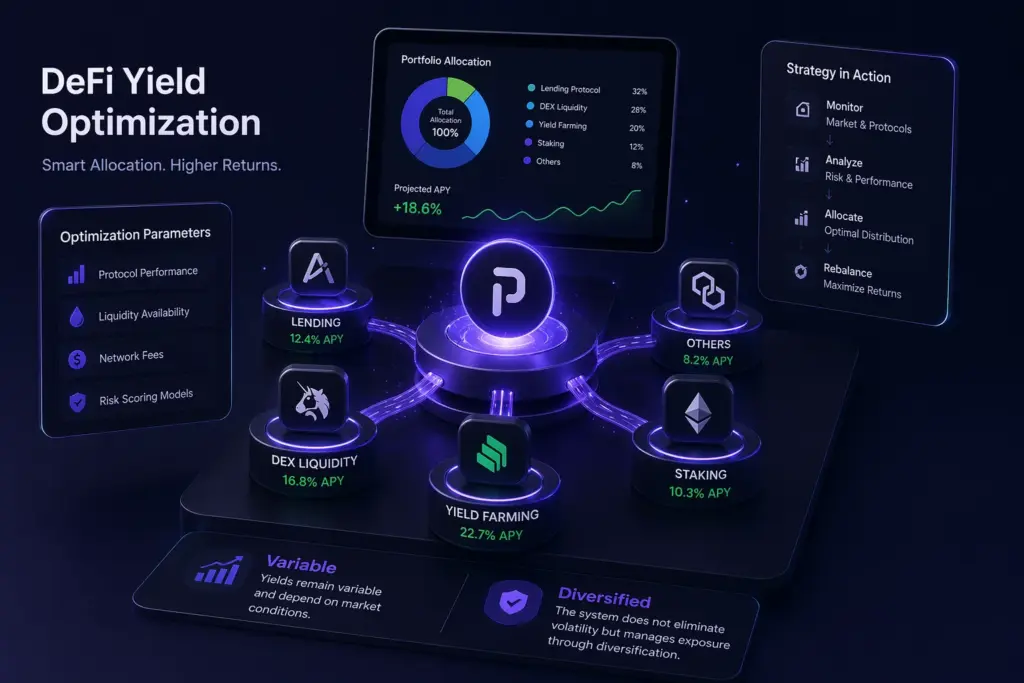
Paycer’s value proposition is strongly tied to yield optimization. The platform connects to multiple DeFi protocols and redistributes user funds based on performance metrics such as APY, liquidity depth, and risk exposure. Instead of locking users into a single protocol, Paycer dynamically reallocates assets across networks. This increases return potential while distributing risk. Return Optimization Parameters: protocol performance, liquidity availability, network fees, risk scoring models.
Variable
However, yields remain variable and depend on market conditions.
Diversified
The system does not eliminate volatility but manages exposure through diversification.
Cross-Chain Interoperability and Infrastructure
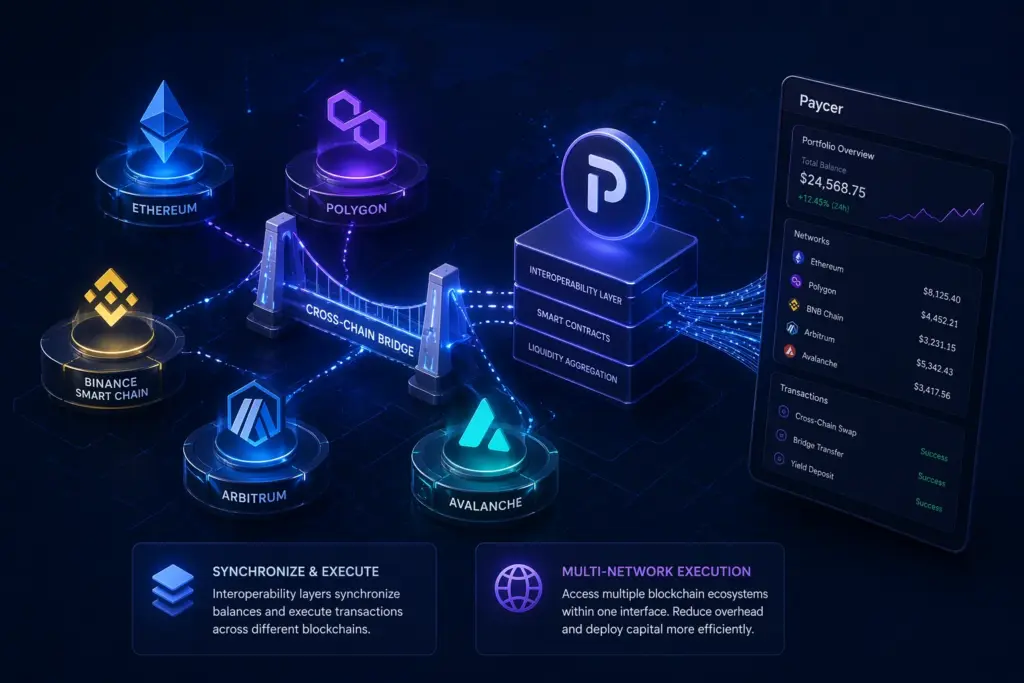
Paycer integrates multiple blockchain ecosystems through cross-chain bridges and smart contract frameworks. This allows users to access opportunities across networks without manually transferring assets between chains. This expands access to DeFi markets that would otherwise require separate tools. The limitation of cross-chain systems is exposure to bridge risks and latency. Paycer addresses this through selective integration and monitoring mechanisms.
Risk Management and Security Framework
Paycer incorporates a structured risk management system designed to address the volatility of DeFi markets. Instead of relying on a single safeguard, it combines multiple layers of protection. Risk Control Mechanisms: protocol stability, historical performance, liquidity conditions, smart contract exposure.
Risk Control Mechanisms
These include protocol selection filters, diversification strategies, and automated monitoring of liquidity and performance metrics. Funds are not allocated to high-risk pools without predefined thresholds.
Operational Transparency
Users receive clear information about fees, risks, and allocation strategies. This reduces uncertainty and supports informed decision-making.
Security Framework
Security is reinforced through encryption, multi-factor authentication, and smart contract auditing. However, as with all DeFi systems, residual risk remains due to external protocol dependencies.
Financial Ecosystem and Service Coverage
Paycer functions as a multi-service financial ecosystem rather than a single-use application. It combines traditional financial tools with DeFi mechanisms into one operational structure. Users can perform savings-like activities, manage portfolios, execute payments, and participate in yield strategies within the same system. This reduces the need for external platforms. The ecosystem approach increases efficiency but requires continuous system updates to remain compatible with evolving protocols.
Compliance, Regulation, and Trust Structure
Paycer operates within regulated frameworks, with a focus on compliance and transparency. The platform aligns its operations with European financial standards, including regulatory oversight in Germany.
Regulatory Positioning
EU
This legal positioning creates a structured environment for users who require both innovation and regulatory assurance.
Banking Objective
License
It also supports the platform’s long-term objective of obtaining a banking license.
Strategic Development
Roadmap
Paycer’s roadmap focuses on expanding protocol integrations, improving AI-driven allocation, and strengthening regulatory positioning.
Audience Segmentation
and Use Cases
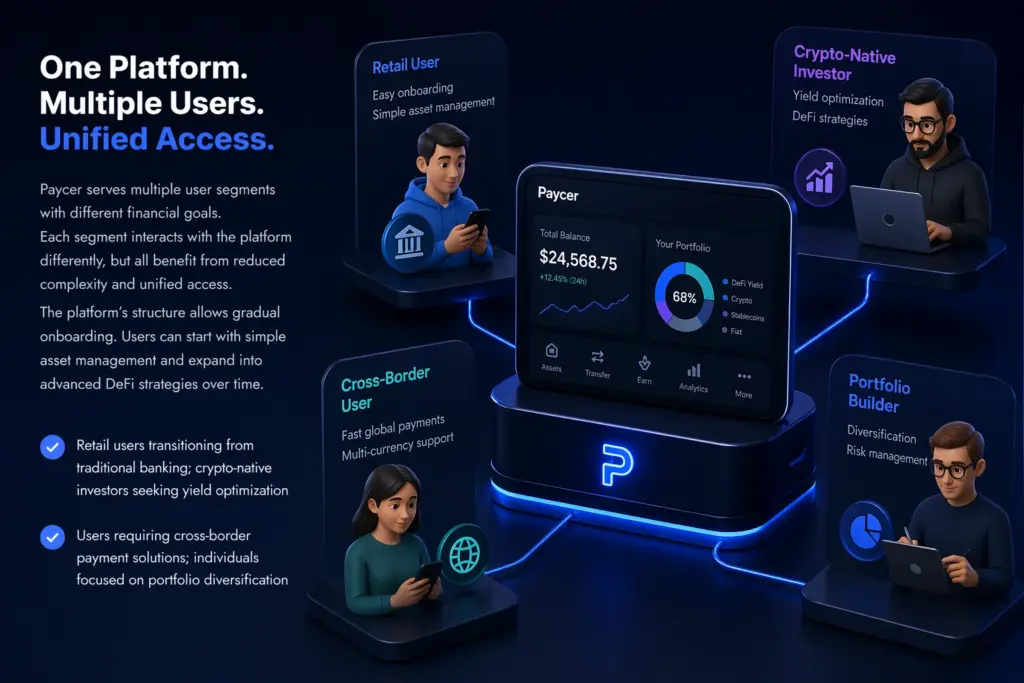
Paycer serves multiple user segments with different financial goals. Each segment interacts with the platform differently, but all benefit from reduced complexity and unified access.
The platform’s structure allows gradual onboarding. Users can start with simple asset management and expand into advanced DeFi strategies over time.